
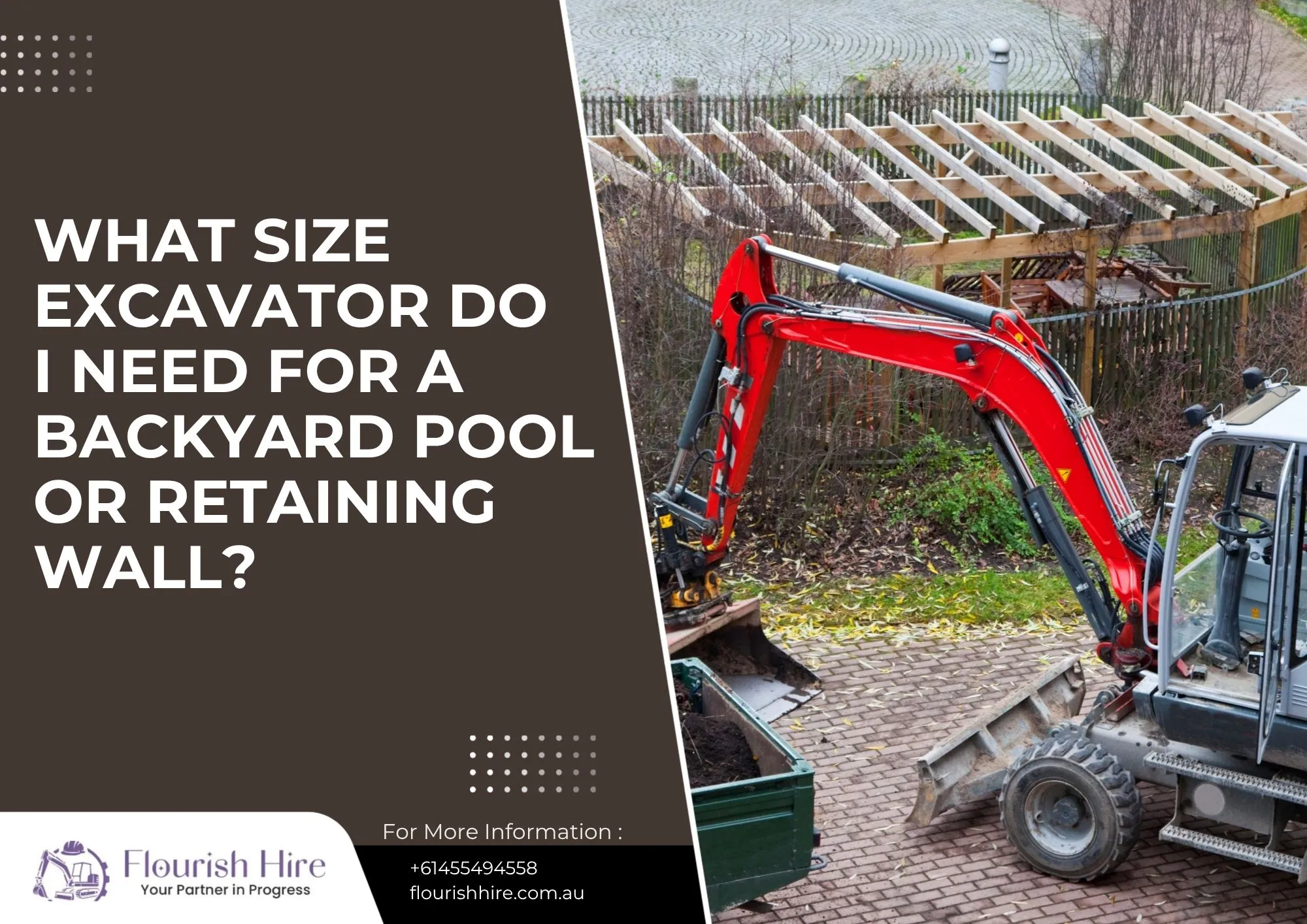
Choosing the right excavator size for a backyard pool, retaining wall, landscaping project, or residential excavation job can make a major difference in productivity, access, and project costs. Many homeowners and contractors make the mistake of choosing a machine based only on size, but the ideal excavator depends on factors like site access, digging depth, soil conditions, project scale, and the amount of material that needs to be moved.
At Flourish Hire, customers can choose from compact excavator options ranging from 0.8 tonne mini excavators to 5.5 tonne machines, allowing them to match the equipment with the exact requirements of their project.
Whether you are preparing a backyard pool area, building a retaining wall, installing drainage, or reshaping your landscape, understanding excavator sizes will help you select the right machine for the job.
Why Choosing the Correct Excavator Size Matters
The biggest excavator is not always the best choice. A larger machine may offer more digging power, but it can become difficult to operate in residential areas with narrow access, fences, gardens, or limited working space.
On the other hand, choosing a machine that is too small can increase project time because the excavator may struggle with deeper digging, heavier soil, or larger volumes of material.
The right excavator should provide the balance between:
- Access to your work area
- Required digging depth
- Soil and ground conditions
- Amount of excavation required
- Space available for operating and spoil removal
For backyard projects, compact excavators are often preferred because they provide strong digging capability while allowing operators to work in tighter residential environments.
0.8T Excavator – Best for Small Backyard Access Projects
A 0.8 tonne excavator is the smallest option in this range and is designed for projects where access is the biggest challenge.
This machine is ideal when you need excavation equipment that can fit through narrow pathways, small gates, or restricted backyard areas.
Best suited for:
- Small landscaping projects
- Garden preparation
- Irrigation and drainage trenches
- Fence post preparation
- Minor earthmoving
- Working near existing structures
The compact design makes a 0.8T excavator useful for residential properties where larger equipment cannot easily enter. However, it is better suited for lighter excavation tasks rather than large pool excavation or heavy retaining wall preparation.
If your project involves removing large amounts of soil or digging deeper foundations, moving up to a larger machine may save significant time.
1.7T Excavator – The Popular Choice for Residential Landscaping
The 1.7 tonne excavator is one of the most versatile choices for homeowners, landscapers, and small contractors.
It offers more digging strength than a micro excavator while still maintaining excellent manoeuvrability around residential properties.
Suitable projects include:
- Backyard landscaping
- Small retaining walls
- Garden redesigns
- Drainage installation
- Utility trenches
- Small excavation areas
A 1.7T excavator is often the preferred option for residential projects because it provides a practical balance between size and performance. It can handle many backyard improvement projects without requiring the large operating area needed by bigger machines.
For a small retaining wall project or preparing an area before landscaping, this size is often a strong starting point.
2T Excavator – More Power for Retaining Walls and Medium Jobs
A 2 tonne excavator provides additional digging capacity compared with smaller machines while remaining compact enough for many residential applications.
This size is suitable when your project requires more power but still involves working in a limited space.
Recommended for:
- Medium-sized retaining wall preparation
- Backyard excavation
- Drainage trenches
- Soil removal
- Footing preparation
- Landscaping projects requiring deeper cuts
The extra weight improves stability, allowing the excavator to handle tougher ground conditions more effectively.
If your retaining wall requires removing compact soil or preparing a larger foundation area, a 2T machine may provide a more efficient solution compared with smaller excavators.
2.6T Excavator – Ideal for Larger Retaining Walls and Pool Preparation
A 2.6 tonne excavator sits in the middle of the range and is designed for projects requiring more reach, digging ability, and stability.
This size is commonly considered when a smaller excavator may complete the work but would take longer due to limited power.
Best applications:
- Backyard pool excavation preparation
- Retaining wall construction
- Drainage systems
- Site preparation
- Larger landscaping projects
- Material loading and soil movement
The 2.6T excavator provides increased capability while still being compact enough for many residential properties where a full-size excavator would not be practical.
For many backyard pool projects, this size can offer the right balance between excavation power and residential access requirements.
5.5T Excavator – For Bigger Excavation and Heavy-Duty Work
A 5.5 tonne excavator is designed for larger projects where productivity and digging power are the priority.
This machine is better suited for properties with enough access space and projects requiring significant excavation.
Suitable applications:
- Larger swimming pool excavation
- Major retaining wall preparation
- Large-scale landscaping
- Bulk soil removal
- Heavy earthmoving
- Construction preparation
A 5.5T excavator can move larger volumes of material more efficiently compared with smaller machines. However, before choosing this size, you should confirm that your property has enough space for machine access, operation, and spoil management.
Quick Excavator Size Comparison
| Excavator Size | Best For | Ideal Projects |
| 0.8T | Tight access areas | Small landscaping, garden work, minor trenches |
| 1.7T | Residential projects | Landscaping, small retaining walls, drainage |
| 2T | Medium backyard work | Retaining walls, deeper excavation |
| 2.6T | More demanding residential jobs | Pool preparation, larger retaining walls |
| 5.5T | Heavy excavation | Large pools, major earthmoving |
How to Choose the Right Excavator for a Backyard Pool
For a backyard pool project, consider:
- Pool Size and Excavation Volume
A small plunge pool may require a smaller excavator, while a large swimming pool requires more digging capacity.
- Site Access
Measure:
- Gate width
- Side access space
- Driveway conditions
- Turning area
A machine that cannot reach the excavation area will create unnecessary delays.
- Soil Conditions
Soft soil is easier to excavate than compact clay, rocky ground, or heavily packed soil. Tougher ground conditions may require a larger machine.
- Spoil Removal
Think about where excavated soil will go. A larger excavator can move material faster, but you still need suitable space for storage or removal.
How to Choose an Excavator for a Retaining Wall
For retaining walls, the excavator size depends on wall height, foundation requirements, and soil conditions.
- Small garden retaining walls: 0.8T–1.7T
- Medium residential retaining walls: 1.7T–2.6T
- Larger retaining wall preparation: 2.6T–5.5T
A correctly sized excavator helps create accurate cuts, prepare foundations, and move materials efficiently.
Hire the Right Excavator for Your Project with Flourish Hire
Selecting the right excavator does not have to be complicated. The best machine depends on your project size, access limitations, and excavation requirements.
Flourish Hire provides a range of excavator hire options suitable for residential landscaping, backyard pools, retaining walls, drainage, and construction preparation. By choosing the correct machine size, you can complete your project more efficiently while avoiding the challenges of using equipment that is too small or too large.
Before booking, consider your site access, project requirements, and the amount of digging involved. If you are unsure which excavator size suits your job, speak with the Flourish Hire team for guidance.
Frequently Asked Questions
-
What size excavator is best for a backyard pool?
The best excavator size depends on the pool size, access, and ground conditions. Smaller pools may work well with a 1.7T or 2T excavator, while larger excavation projects may require a 2.6T or 5.5T machine.
-
Can a 0.8T excavator dig a retaining wall foundation?
A 0.8T excavator can handle small retaining wall preparation, but larger retaining walls may require more digging power and stability from a 1.7T or 2.6T excavator.
-
What excavator size fits through a backyard gate?
Compact excavators such as 0.8T and smaller mini excavators are designed for restricted access areas. Always check your gate width and machine dimensions before booking.
-
Is a bigger excavator always better?
No. A larger excavator provides more power but may not be suitable for tight residential areas. The best choice is the machine that matches your project requirements.
-
What size excavator do I need for a retaining wall?
For small garden walls, a 0.8T–1.7T excavator may be suitable. Larger residential retaining walls often benefit from 2T–2.6T machines depending on excavation depth and soil conditions.
-
How do I know which excavator to hire?
Consider your project type, access space, digging depth, soil conditions, and material volume. If you are unsure, discuss your requirements with an equipment hire provider before booking.
Flourish Hire
+61455494558
122-128 Teviot Rd, Greenbank QLD 4124, Australia